Loading...
Join our Facebook Group: Join: Expats in Saudi Arabia
Loading...
A complete, honest guide to relocating to Saudi Arabia. From visa paperwork and the Kafala system to finding housing, understanding work culture, and surviving the first month.
Saudi Arabia is changing faster than any country in the Middle East. For decades, the Kingdom was largely closed to outsiders - there was no tourist visa, no cinemas, no concerts, and very few reasons for anyone other than oil workers and Hajj pilgrims to visit. That era is over. In 2019, Saudi Arabia launched its first-ever tourist visa, opening its doors to visitors from 49 countries (the list has since expanded). Since then, international tourism has exploded: the country welcomed over 100 million visitors in 2023, and the government's target under Vision 2030 is 150 million annual visitors by the end of the decade.
The transformation goes far beyond tourism. Saudi Arabia in 2026 has cinemas, live concerts (from Ed Sheeran to Formula 1 and WWE), world-class restaurants, art galleries, music festivals, and a social atmosphere in major cities that would have been unimaginable a decade ago. Women drive. Mixed-gender events are normal. Dress codes have relaxed significantly. New entertainment districts, waterfront promenades, and public parks are opening across every major city. The country is actively investing in becoming a destination people want to live in, not just a place they go to earn money.
Behind all of this is Vision 2030, the government's plan to move beyond oil dependence, backed by over $1 trillion in investment. Mega-projects that sound like science fiction are actually being built: NEOM, a futuristic city from scratch in the northwest desert with a 170-kilometer-long linear city called The Line. The Red Sea Project, a luxury tourism destination along an untouched coastline with 50+ islands. Qiddiya, an entertainment city near Riyadh that will be the largest in the world. Diriyah Gate, a cultural heritage development around the birthplace of the Saudi state. These are not renderings on a website - they are active construction sites employing tens of thousands of people right now.
This investment has created enormous demand for workers. Saudi Arabia is home to over 13 million expatriates - roughly a third of the country's entire population - and the number keeps growing. Riyadh alone is projected to double from 7.5 million to 15 million by 2030. The government now requires multinational companies to establish regional headquarters in Riyadh if they want government contracts, which has brought Amazon, Google, PwC, McKinsey, and hundreds of others to the city. For professionals in engineering, healthcare, IT, finance, construction, hospitality, and dozens of other fields, Saudi Arabia offers tax-free salaries and career opportunities that are hard to find anywhere else. But people are increasingly coming not only for the money - they are coming because Saudi Arabia has become a genuinely interesting place to live.
It is still a conservative, deeply Islamic society - and understanding that is essential before you move. But the Saudi Arabia of 2026 is a country that welcomes foreigners, invests billions in quality of life, and is building itself into something entirely new. This guide covers everything you need to know to make the move.
The honest answer to "is it worth it?" depends entirely on what you are optimizing for and how willing you are to accept trade-offs. Let me lay out both sides plainly.
Saudi Arabia has zero personal income tax. Your gross salary is your take-home pay - no deductions, no brackets, no annual filing. On top of that, most employers offer packages that go well beyond a basic salary: a housing allowance (typically 25-40% of base salary), a transport allowance, annual return flights for you and your family, CCHI health insurance, and sometimes education allowances for children. A professional earning the equivalent of $5,000/month in Europe might earn $6,000-8,000/month in Saudi Arabia - and keep all of it. Many expats save 40-70% of their income, something nearly impossible in most Western countries where taxes and cost of living eat into everything. Add end-of-service benefits (a lump-sum payment when you leave calculated from years worked), and the financial picture is genuinely compelling.
The career opportunities are equally strong. If you work in oil and gas, construction, healthcare, IT, education, hospitality, or project management, Saudi Arabia has more demand than supply. Some sectors are being built from scratch - entertainment, tourism, sports, fintech - which means you can hold positions and gain experience that would be unavailable in more mature markets. A mid-level marketing manager in London might become a director-level hire in Riyadh. An engineer with five years of experience might lead projects worth hundreds of millions. Career acceleration is real here.
Safety is another factor people underestimate. Saudi Arabia has one of the lowest crime rates in the world. Violent crime is almost nonexistent, theft is rare, and most expats feel genuinely safer here than in their home cities. For families with children, this is often the deciding factor.
Alcohol is completely prohibited - no bars, no wine with dinner, no duty-free at the airport. For some people this is a non-issue; for others it is a dealbreaker. The Kafala (sponsorship) system means your employer controls significant aspects of your residency, including historically your ability to leave the country (though 2021 reforms have loosened this considerably). Summer temperatures regularly hit 45-50°C (113-122°F), making outdoor life impossible for 3-4 months. The social scene, while improving fast, is not London or Dubai - especially outside Riyadh and Jeddah. If you have a non-working partner, they may find life isolating, particularly outside of compounds. Dress codes are more conservative. And bureaucracy - dealing with Jawazat, Absher, Muqeem, Ejar, and the various government platforms - requires genuine patience.
The expats who thrive in Saudi Arabia are typically those who come with clear financial goals, respect the culture without trying to recreate their home country, and are genuinely curious about the transformation happening around them. The ones who struggle are those who expected Dubai and got something different. Saudi Arabia is not the UAE. It is its own place, with its own rules and rhythms, and the sooner you accept that, the better your experience will be.
Almost everyone who moves to Saudi Arabia for work comes on an employer-sponsored employment visa. Unlike countries where you can arrive on a tourist visa and job-hunt, Saudi Arabia requires you to have a job offer and an employer willing to sponsor you before you set foot on a plane. This is the fundamental difference from countries like the UAE or many European nations.
The process works like this: your employer obtains a work permit through the Ministry of Human Resources and Social Development (MHRSD), then gets visa authorization from the Ministry of Foreign Affairs (MOFA). MOFA sends the authorization to the Saudi embassy in your home country, where you collect the actual visa stamp in your passport. The whole process typically takes 4-8 weeks from signed job offer to boarding the plane. Some employers are faster (large companies with dedicated immigration teams), some are painfully slow (smaller firms figuring it out as they go). Read our detailed work visa guide for the full step-by-step process.
Once you arrive, your employer converts your work visa into an Iqama (residence permit) within 90 days. The Iqama is the single most important document in your Saudi life - you need it for banking, renting, driving, healthcare, phone contracts, and every government interaction. It is tied to your employer under the Kafala system, meaning they are your sponsor and bear legal responsibility for your stay. Without a valid Iqama, you cannot function in Saudi Arabia. With one, virtually everything opens up.
If you want to explore Saudi Arabia before committing to a move - visit cities, attend job interviews, see how the country feels - tourist e-visas are now available for citizens of 49+ countries (including the US, UK, EU, Australia, Canada, Japan, and South Korea). You apply online at visa.visitsaudi.com, pay about 480 SAR (~$128), and receive a multiple-entry visa valid for one year with stays up to 90 days per visit. Processing usually takes 24 hours. You cannot work on a tourist visa, but it is the smart move for a scouting trip.
For entrepreneurs, investors, and wealthy professionals, there is a third path: Premium Residency, Saudi Arabia's equivalent of a green card. For 800,000 SAR one-time (permanent) or 100,000 SAR/year (renewable), you get self-sponsored residency with no employer dependency. You can work for anyone, own businesses, buy multiple properties, sponsor family yourself, and travel without exit visas. The Kafala system simply does not apply to Premium Residency holders. It is expensive, but for those who can afford it, it changes the equation entirely.
Important: Visa rules are updated frequently as part of Vision 2030 reforms. New visa categories are introduced regularly (freelancer visas, investor visas, event visas). Always verify requirements on official Saudi government portals before making plans.
The moment you land, one person becomes the most important figure in your Saudi life: your company's PRO (Public Relations Officer). The PRO is the employee who handles all government paperwork - your medical exam, biometrics, Iqama application, and any interaction with Jawazat (the passport and immigration authority). A good PRO makes your first month smooth. A slow or incompetent one makes it miserable. Before you even board the plane, get your PRO's name and phone number, and confirm that your employer has arranged airport pickup and temporary accommodation. Companies that leave you to figure out arrival logistics on your own are telling you something about how they operate.
Your first task after landing is getting a Saudi SIM card. Buy a prepaid one from STC, Mobily, or Zain at the airport or the nearest phone shop - you only need your passport, no Iqama required. A Saudi phone number unlocks everything: WhatsApp (the default communication channel for work, landlords, and restaurants alike), OTPs for banking and government platforms, ride-hailing apps like Uber and Careem, and food delivery through HungerStation, Jahez, and ToYou. Without a local number, you are functionally cut off from how Saudi Arabia operates.
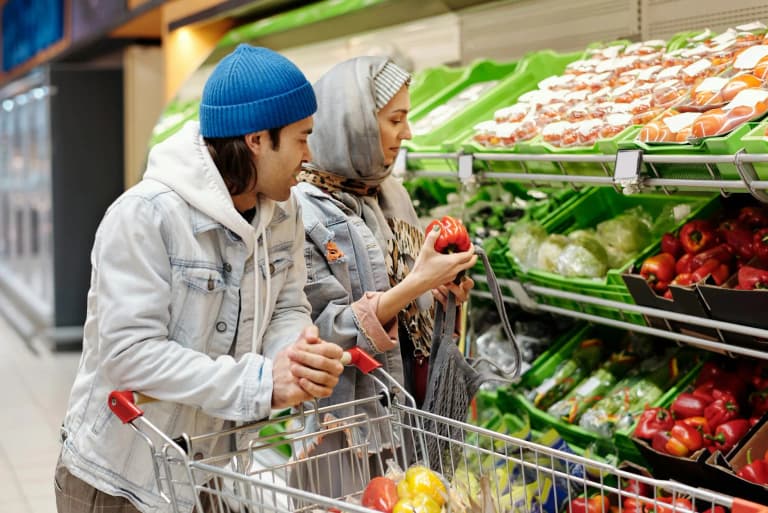
Saudi cities are extremely car-dependent. Outside of Riyadh's new metro, public transport barely exists. Until you get a car and a driving license, you will rely on Uber, Careem, or lifts from colleagues. Find the nearest supermarket early on - Panda, Tamimi Markets, Carrefour, and Lulu Hypermarket are the main chains. Local food is everywhere and affordable: a shawarma plate costs 15-25 SAR, a biryani meal 25-40 SAR. Western chains (McDonald's, KFC, Starbucks) are on every main street if you need something familiar while adjusting.
Shortly after you arrive, your PRO arranges a medical examination at an approved center: blood tests (HIV, Hepatitis B/C, syphilis), a chest X-ray for tuberculosis, and a basic physical. Results go directly to Jawazat. After that comes biometrics at a Jawazat office - fingerprints and a photograph. Expect queues, especially in Riyadh. Your PRO should accompany you to both appointments and handle the paperwork. Once biometrics are done, your employer submits the Iqama application through the Muqeem portal. The physical green Iqama card is printed by Jawazat, delivered to your employer, and handed to you. This whole process - from medical exam to Iqama in hand - typically takes 3-6 weeks.
Until your Iqama is issued, you can start work and buy prepaid goods, but almost everything else is locked. You cannot open a bank account, sign a rental contract, register on Absher, get a postpaid phone plan, set up home internet, or apply for a driving license. This limbo period is the single most common source of frustration for newcomers, and it is entirely predictable. Arrive with enough cash or an international debit card to cover 3,000-5,000 SAR in living expenses - food, transport, toiletries, and the SIM card. If your employer provides temporary housing, clarify exactly how many weeks it covers and what happens when it ends. If your first salary will arrive before you have a Saudi bank account, ask how they will pay you (some companies pay the first month by cheque or cash).
The Iqama changes everything. Once you have it, the next steps follow in quick succession: open a bank account, register on Absher, start apartment hunting, and apply for a driving license. Within a week of receiving it, you can go from a person in limbo to someone with a bank account, a phone contract, and a signed lease. The contrast is dramatic, and the relief is real.
Your employer's office location usually determines your city, but if you are weighing multiple offers or have any flexibility, this decision shapes your entire experience in Saudi Arabia. The Kingdom is enormous - roughly the size of Western Europe - and cities differ dramatically in personality, climate, cost, and lifestyle. Here is what you need to know about every major city, from the capital to the southern highlands.
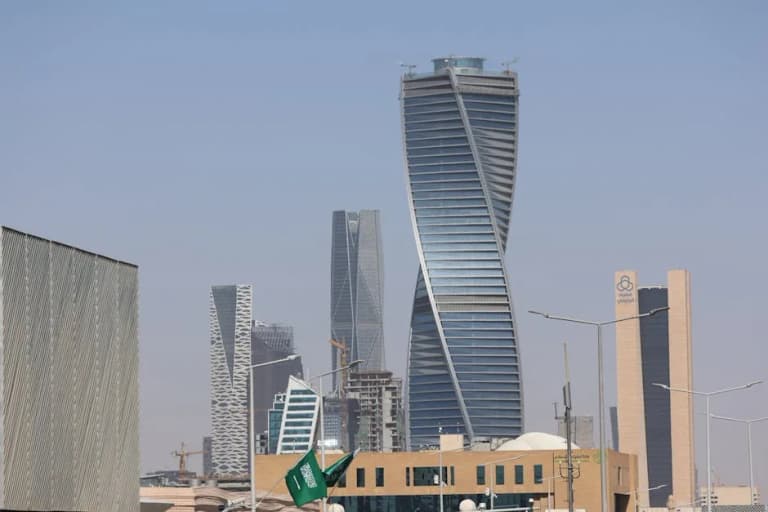
Riyadh is where the money, the jobs, and the transformation are concentrated. With 7.7 million people and growing fast, it is the center of government, finance, and Vision 2030. A brand-new metro system (6 lines, 85 stations), Riyadh Boulevard, and hundreds of new restaurants are reshaping the city. Amazon, Google, and McKinsey have moved regional HQs here. The downsides: most expensive housing, endless urban sprawl (100+ km across, you need a car), and brutal dry summer heat at 48-50°C. One-bedroom: 4,000-10,000 SAR/month.
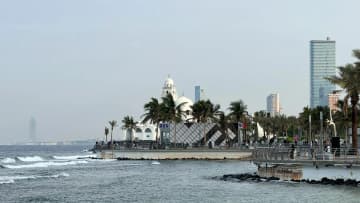
Jeddah sits on the Red Sea coast and has always been Saudi Arabia's most cosmopolitan city. Centuries as the gateway to Makkah gave it exposure to cultures from Africa, South Asia, and Southeast Asia. The old town (Al-Balad) is a UNESCO World Heritage Site, the art scene is the Kingdom's strongest, and the waterfront Corniche is a beloved gathering place. Strong in logistics, trade, hospitality, and tourism. Summers are hot and humid, but sea breezes cool the evenings. One-bedroom: 3,500-9,000 SAR/month.
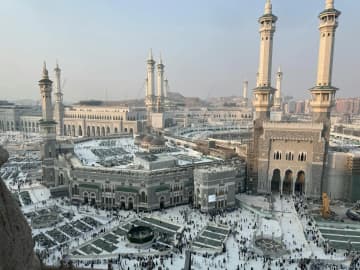
The holiest city in Islam and home to the Masjid al-Haram and the Kaaba. Non-Muslims are not permitted to enter. For Muslim professionals, Mecca offers a unique spiritual dimension to daily life. The economy revolves around religious tourism and hospitality - hotels, restaurants, transport, and retail serving millions of pilgrims annually. The Clock Tower (Abraj Al-Bait) dominates the skyline. One-bedroom: 3,000-7,000 SAR/month.
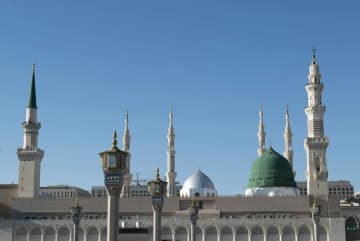
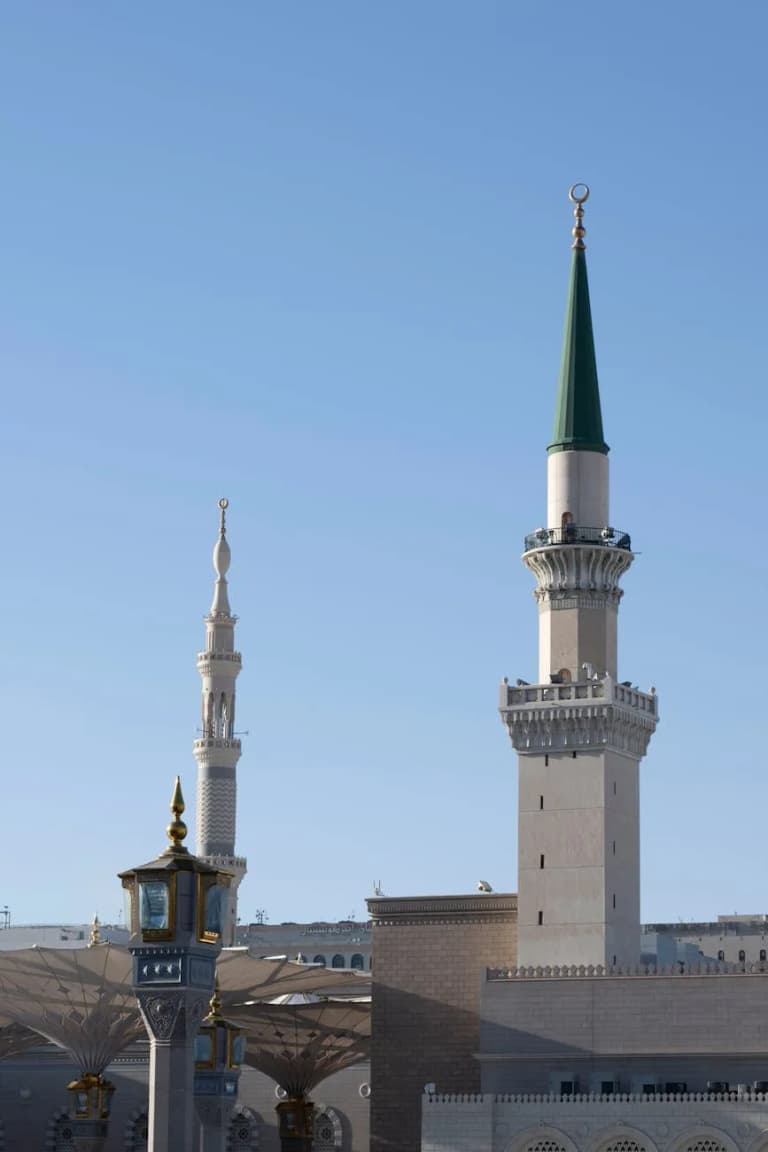
The second holiest city in Islam, home to the Prophet's Mosque (Al-Masjid an-Nabawi). Smaller and calmer than Mecca, with a residential feel. Jobs center on hospitality, healthcare, education, and religious services. The Islamic University draws scholars worldwide. Famous date farms and historic sites like Mount Uhud and Quba Mosque surround the city. Lower cost of living than the big three. One-bedroom: 2,500-5,000 SAR/month.
Administrative capital of the Eastern Province, Saudi Arabia's oil heartland, on the Arabian Gulf coast. Gateway to the wider Dammam-Khobar-Dhahran metro area (~2 million people). The King Abdulaziz Center for World Culture (Ithra) is an architectural landmark, the Corniche runs along the waterfront, and Tarout Island nearby has 5,000 years of history. Economy: oil, gas, petrochemicals, healthcare. One-bedroom: 3,000-6,000 SAR/month.
The lifestyle hub of the Eastern Province. Connected to Bahrain by the 25 km King Fahd Causeway (30-minute drive for a weekend escape). Best restaurant and cafe scene in the area, with the Khobar Corniche as the main social gathering point. Scitech museum and Half Moon Beach are popular weekend destinations. Many Aramco and SABIC professionals choose Khobar for its livelier atmosphere. One-bedroom: 3,000-7,000 SAR/month.
Essentially Saudi Aramco's company town. The Aramco compound is a self-contained American-style suburb with schools, cinemas, pools, golf courses, and social clubs. Also home to KFUPM, one of the Middle East's top engineering universities. If you work for Aramco, you will likely live in the compound with subsidized housing and amenities. Outside it, Dhahran is small and residential. One-bedroom: 3,000-6,000 SAR/month (or company-provided).
One of the largest industrial cities in the world, built from scratch in the 1970s by the Royal Commission. Hosts massive petrochemical complexes run by SABIC, Aramco, and international joint ventures. The Royal Commission side is exceptionally well-planned: wide boulevards, parks, a marina, mangrove boardwalks, and a strong community feel. Quiet, family-friendly, with lower living costs. One-bedroom: 2,500-5,000 SAR/month.
Mirrors Jubail on the Red Sea coast. Has an industrial city with refineries and petrochemical plants, plus an older town with traditional character. Popular with divers - the coral reefs offshore are some of the best in Saudi Arabia. The annual Yanbu Flower Festival draws visitors from across the Kingdom. Small, quiet, and affordable. Jobs in industry, logistics, and increasingly tourism. One-bedroom: 2,000-4,500 SAR/month.
In the Asir Mountains at 2,200 meters - something rare in Saudi Arabia: cool temperatures (summer highs 25-30°C while Riyadh bakes at 48°C). Green, misty, dramatically different from the desert. Growing domestic tourism destination with cable cars, Soudah peak (3,000m, highest in Saudi Arabia), and the heritage village of Rijal Almaa. Jobs in tourism, government, healthcare. One of the most affordable cities. One-bedroom: 2,000-4,000 SAR/month.
At 1,700 meters in the Hejaz Mountains, 90 minutes from Mecca. Known for its famous rose farms and annual rose festival, and historically the summer retreat for Mecca and Jeddah residents. Shubra Palace, Souq Okaz (recreation of an ancient Arabian market), and the dramatic Al Hada mountain road are landmarks. Agriculture (roses, honey, grapes, pomegranates), tourism, and government. One-bedroom: 2,000-4,000 SAR/month.
About 80 km south of Riyadh. One of Saudi Arabia's most important agricultural centers - the Al Safi dairy farm is one of the largest in the world. Significant military presence with Prince Sultan Air Base. Quieter and more traditional than the capital, with much lower costs. Some people live here and commute to Riyadh for the cheaper rent. One-bedroom: 1,500-3,000 SAR/month.
In the northern highlands, known for Jubbah's dramatic rock formations (UNESCO World Heritage Site with ancient petroglyphs), A'arif Fort, and the vast Nafud Desert. Strong Bedouin heritage and famous throughout Saudi Arabia for the generosity of its people. Economy: agriculture, government, mining. Winters are genuinely cold (below freezing possible) - unique in Saudi Arabia. One-bedroom: 1,500-3,500 SAR/month.
Capital of the Qassim region, one of Saudi Arabia's most conservative and traditional areas. Center of the country's date palm industry - the Buraidah Date Festival trades billions of riyals worth of dates annually. Unaizah nearby offers historic souqs and heritage architecture. Jobs in agriculture, trade, education, government. Among the lowest living costs in the Kingdom. One-bedroom: 1,500-3,000 SAR/month.
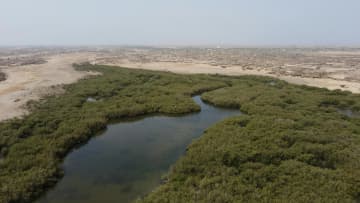
Saudi Arabia's tropical corner on the southwestern coast near Yemen. Mangrove forests, the Farasan Islands marine sanctuary, and a climate more like East Africa than the Arabian desert. Pretty Corniche, coral-stone heritage district, and a growing fishing and agriculture sector (mangoes, papayas, coffee grow here). One of the most affordable and least crowded cities. One-bedroom: 1,500-3,000 SAR/month.
Saudi Arabia's mega-projects are not cities yet - they are active construction sites in remote locations. NEOM is being built in the Tabuk region (northwest), The Red Sea Project along the coast between Yanbu and Jeddah, and Qiddiya just outside Riyadh. They recruit across all disciplines and offer premium salaries (often 20-40% above market) with employer-provided housing, meals, and transport. The trade-off: isolation, limited social life, basic amenities, and the frontier feeling of living on a construction site. For the right personality - adventurous, career-driven, savings-focused - it is a compelling proposition.
Monthly rent for a 2-bedroom apartment. Scroll horizontally on mobile.
| City | Population | Rent Range | Summer Heat | Key Industries | Best For |
|---|---|---|---|---|---|
| Riyadh | 7.7M | 3,000–12,000 SAR | 40–50°C / 104–122°F, dry | Finance, tech, government | Careers, startups |
| Jeddah | 4.7M | 2,500–10,000 SAR | 35–45°C / 95–113°F, humid | Trade, tourism, logistics | Coastal lifestyle |
| Mecca | 2.0M | 2,000–8,000 SAR | 40–48°C / 104–118°F, dry | Religious tourism, hospitality | Muslim expats |
| Medina | 1.4M | 1,500–6,000 SAR | 38–45°C / 100–113°F, dry | Education, agriculture | Peaceful, spiritual |
| Dammam | 1.3M | 2,000–7,000 SAR | 38–48°C / 100–118°F, humid | Oil & gas, ports | Engineering, industry |
| Khobar | 400K | 2,500–8,000 SAR | 38–46°C / 100–115°F, humid | Oil services, retail | Expat families |
| Dhahran | 150K | 3,000–6,000 SAR | 38–48°C / 100–118°F, humid | Aramco, energy | Compound living |
| Jubail | 400K | 2,500–5,000 SAR | 36–46°C / 97–115°F, humid | Petrochemicals, SABIC | Industrial careers |
| Yanbu | 300K | 2,000–4,500 SAR | 34–42°C / 93–108°F, humid | Refining, ports | Quiet coastal life |
| Abha | 500K | 2,000–4,000 SAR | 25–35°C / 77–95°F, cool | Tourism, government | Cool climate |
| Taif | 700K | 2,000–4,000 SAR | 28–38°C / 82–100°F, mild | Agriculture, tourism | Mild summers |
| Al Kharj | 400K | 1,500–3,000 SAR | 40–50°C / 104–122°F, dry | Agriculture, military | Riyadh commuters |
| Hail | 600K | 1,500–3,500 SAR | 35–44°C / 95–111°F, dry | Agriculture, mining | Heritage, low cost |
| Buraidah | 700K | 1,500–3,000 SAR | 38–48°C / 100–118°F, dry | Agriculture, dates | Traditional life |
| Jizan | 200K | 1,500–3,000 SAR | 32–40°C / 90–104°F, tropical | Agriculture, fishing | Tropical south |
Zoom in to see city photos and rent prices. Click a city to open its guide.
Housing in Saudi Arabia falls into two worlds, and the choice between them shapes your daily experience more than almost any other decision you will make.
Compounds are gated residential communities, often with swimming pools, gyms, tennis courts, playgrounds, small supermarkets, clinics, and social clubs. Inside a compound, the atmosphere is noticeably more relaxed - women may dress casually, families barbecue by the pool, children ride bikes on quiet streets, and there is a built-in social circle of other expats without you having to do anything. Compounds are especially popular with Western families and those who are new to the Kingdom. The major compound operators in Riyadh include Al Bustan, Arizona Compound, and Eid Compound; in the Eastern Province, Aramco's residential communities are a world unto themselves.
The downsides of compounds: they are more expensive than equivalent city apartments (Riyadh compounds range from 6,000-15,000 SAR/month; Eastern Province somewhat less), they can feel like a bubble disconnected from Saudi life, and commuting to work from a suburban compound through Riyadh traffic can mean 45-60 minutes each way. Some expats live in compounds for years and barely experience the real Saudi Arabia.
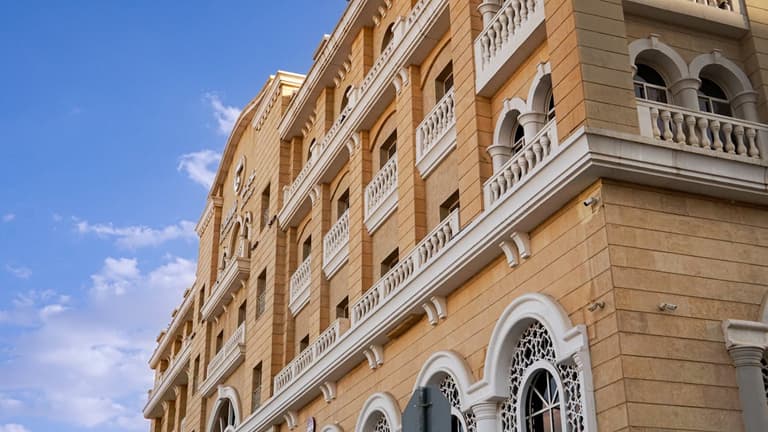
City apartments and villas put you in the fabric of Saudi life. They are cheaper (a one-bedroom in a good Riyadh neighborhood like Al Olaya or Al Malqa runs 3,000-6,000 SAR), offer more space for the money, and force you to engage with the local neighborhood. You will know the guy at the corner bakery, the pharmacist, the shawarma place that is open at 2am. Many single expats and younger couples prefer this immersion. The trade-off: no pool, no gym (unless your building has one), more administrative self-reliance, and landlord relationships that require patience and sometimes Arabic.
Regardless of where you live, all rental contracts must be registered through the Ejar platform. This provides legal protection for both sides - without Ejar registration, you have limited recourse if something goes wrong. Most leases are for one year, and here is the part that shocks newcomers: rent is almost always paid upfront via post-dated cheques, not monthly bank transfers. Landlords typically want 1-4 cheques covering the full year. A landlord asking for 2 cheques means you pay half the annual rent on move-in day. Add a security deposit of 1-2 months, and you may need 15,000-35,000 SAR upfront just for housing. This is the single biggest initial expense, and not budgeting for it is one of the most common mistakes.
For apartment hunting, the apps Aqar and Bayut are your primary tools - they are the Saudi equivalents of Zillow or Rightmove. Filter by neighborhood, budget, and number of bedrooms. Your colleagues and company PRO can also recommend areas and landlords. Many expats spend their first 2-4 weeks in a hotel or serviced apartment (Booking.com and Airbnb both work in Saudi Arabia) while searching. Do not rush this decision - the wrong apartment in the wrong neighborhood can make you miserable. For detailed guidance, see our complete guide to renting in Saudi Arabia.
Once your Iqama arrives, a cascade of administrative tasks becomes possible and immediately necessary. The order matters because each step unlocks the next.
Your first stop after receiving the Iqama should be a bank. Bring your Iqama, passport, and an employer letter confirming your position and salary. The major banks for expats are Al Rajhi Bank (largest Islamic bank in the world, most branches, good mobile app), Saudi National Bank (SNB) (formed from the merger of NCB and Samba, strong for corporate clients), Riyad Bank (good English support), and Al Bilad Bank. All offer English-language mobile banking. Your employer will route salary through whichever bank they use for payroll via the Wage Protection System (WPS), so your primary account is often predetermined. Once open, you receive a Mada debit card - the national payment network accepted everywhere. For the full process, see our bank account guide.
Absher is the government services super-portal and the single app you will use most in Saudi Arabia. Through Absher you can check your Iqama status and expiry, view and pay traffic fines, request exit/re-entry visas, manage dependent visas, book Jawazat appointments, and access dozens of other services. Your employer's PRO initiates the registration by activating your account, after which you set up your own login with your mobile number. Download both the Absher website and the Absher Individuals mobile app immediately. You will use it every week.
With your Iqama, you can upgrade from prepaid to a proper postpaid mobile plan and set up home internet. The three main providers are STC (largest network, best rural coverage), Mobily (strong in urban areas, competitive data plans), and Zain (good for international calling). Fiber broadband (FTTH) is available in most urban neighborhoods and costs 200-400 SAR/month for 100-500 Mbps. Mobile plans with 100-200 GB of data run 100-250 SAR/month. VoIP services like regular WhatsApp and FaceTime calling now work without VPN - a change from previous years.
Saudi Arabia is one of the most car-dependent countries in the world. Outside of Riyadh's metro, public transport is minimal. You need to drive. If you hold a license from the US, UK, EU, Australia, Canada, Japan, or South Korea (and a few others), you can convert it to a Saudi license with just an eye test and some paperwork - no driving test required. Other nationalities need to take both a theory and practical driving test at a Saudi driving school. Your home-country license (plus an International Driving Permit if you have one) is valid for about 3 months, so start the conversion process immediately. Relying on Uber and Careem costs 500-1,500 SAR/month and limits your independence.
The Tawakkalna app carries your digital Iqama with a scannable QR code. Security guards, hospitals, hotels, and government offices can verify your identity through it. It is legally accepted at most checkpoints and service points. Think of it as your digital wallet for Saudi government ID - you pull it out at building entrances, when picking up packages, at hotel check-in, and whenever someone asks for identification. Between Absher, Tawakkalna, your banking app, and ride-hailing apps, your phone is essentially your entire administrative life in Saudi Arabia.
The working week runs Sunday to Thursday, with Friday and Saturday as the weekend. This trips up every newcomer - your body thinks it is a weekday but the calendar says otherwise. Standard hours are 8 hours a day (48 per week), though many corporate and tech jobs follow a 9-to-5 schedule. During Ramadan, working hours are legally reduced to 6 hours a day for Muslim employees, and most companies apply this to everyone. The entire rhythm of the country shifts during Ramadan: offices open later, close earlier, restaurants only serve after sunset, and business meetings often happen at 10pm after iftar.
The biggest financial draw is the zero personal income tax. There is no tax filing, no brackets, no deductions - what your contract states is what hits your bank account. But the real money is in the package, not just the base salary. A typical expat compensation package includes: housing allowance (25-40% of base salary, sometimes provided as an apartment or compound villa instead), transport allowance (10-15% of base, or a company car), annual return flights for you and family (1-2 per year, economy or business class depending on seniority), CCHI health insurance, and sometimes education allowances (partial or full school fees for children). Some companies add furniture allowances, relocation bonuses, and annual performance bonuses. Always negotiate the full package, not just the base number - a slightly lower salary with full housing and schooling covered can be worth far more than a higher base with nothing included.
One thing you must understand before accepting a role is Nitaqat (Saudization). The government requires companies to employ a minimum percentage of Saudi nationals, and the quota varies by industry, company size, and zone. Companies are color-coded from Platinum (exceeding Saudi employment targets) to Red (failing badly). Red-zone companies cannot hire new expats and may not renew existing visas. This means your job security partly depends on your company's Nitaqat status. Certain professions are now reserved exclusively for Saudis: HR, some accounting roles, retail sales, security, and others. The list evolves, so verify before assuming any role is open to foreigners.
When you leave Saudi Arabia, you are entitled to end-of-service benefits (EOSB): half a month's final salary for each of the first five years, and a full month's salary for each additional year. Someone earning 15,000 SAR/month who worked seven years receives (5 × 7,500) + (2 × 15,000) = 67,500 SAR as a departure bonus. If you resigned (rather than being terminated), the amount is reduced for short tenures. Your employer is legally required to pay EOSB within one week of your last working day. For more on the job market and where to find opportunities, check platforms like Bayt.com, LinkedIn, and GulfTalent.
Saudi Arabia has invested massively in healthcare, and the quality of care in major hospitals is genuinely world-class. King Faisal Specialist Hospital in Riyadh is internationally ranked for oncology and organ transplants. Dr. Sulaiman Al Habib operates a chain of premium hospitals across the Kingdom. Saudi German Hospital, Mouwasat, and Dallah Hospital are other major private facilities where English-speaking doctors are the norm. The medical workforce is one of the most international in the world - your cardiologist might be Egyptian, your dentist Filipino, your GP British. Language is rarely a barrier in private healthcare.
Every expat in Saudi Arabia must have CCHI-compliant health insurance (Council of Cooperative Health Insurance), and your employer is legally required to provide it. This covers doctor visits, hospital stays, prescriptions, emergency care, and basic diagnostics. The exact coverage depends on your insurance class. Basic plans (Class C) cover a network of approved hospitals with co-payments. Premium plans (Class A and B, common for senior expats) offer wider hospital networks, lower co-payments, dental, optical, and sometimes international coverage. Before accepting a job offer, ask specifically: which insurance class? Which hospitals and clinics are in the network? Does it cover your family or just you? Is maternity covered? The difference between a Class C plan limited to small clinics and a Class A plan covering Dr. Sulaiman Al Habib is enormous.
Pharmacies are widespread (look for Al Nahdi and Al Dawaa, the two largest chains) and well-stocked with most common medications available without a prescription. However, some drugs that are freely available in your home country are controlled or outright banned in Saudi Arabia. This includes certain ADHD medications (Adderall and some formulations of methylphenidate), some benzodiazepines, specific painkillers containing codeine, and sleeping pills. If you take prescription medication regularly, check with the Saudi Food and Drug Authority (SFDA) before traveling. Bring a doctor's letter in English and Arabic stating your condition, the medication name and dosage, and the prescribing physician's details. Arriving with banned substances can result in confiscation, fines, or worse.
Emergency numbers: 997 for ambulance, 911 for general emergency (police, fire, ambulance), 937 for the Ministry of Health medical consultation hotline. Save these in your phone on day one.
If you are moving with children, schooling will be one of your biggest decisions and one of your largest expenses. Saudi Arabia has a well-established network of international schools offering British (IGCSE/A-Levels), American (AP/High School Diploma), IB (International Baccalaureate), Indian (CBSE/ICSE), Pakistani, and French curricula. The quality varies enormously between institutions.
At the top end, schools like the American International School of Riyadh (AISR), the British International School of Jeddah (BISJ), and the International Schools Group (ISG) in the Eastern Province offer facilities and academic standards that rival the best schools in Dubai or London. Campuses have science labs, swimming pools, sports fields, and performing arts centers. Teachers are recruited internationally. These schools cost 50,000-80,000 SAR per year per child, and they have waiting lists that can stretch for months or even a full academic year. Apply the moment you accept a job offer - before you even have a departure date.
Mid-range international schools (Indian, Pakistani, Filipino curricula, or smaller British/American schools) cost 15,000-35,000 SAR per year and are more accessible. They are perfectly adequate for most families, though facilities and extracurricular offerings are more modest. Many South Asian expat families choose these schools and are very satisfied.
Public schools are free but teach in Arabic following the Saudi national curriculum, which includes Islamic studies. They are impractical for most expat children who do not speak Arabic fluently, though some families with Arabic-speaking backgrounds do use them.
Some employers include an education allowance in your package - this can be partial (covering a percentage of fees) or full (covering the entire tuition at a specified school or up to a cap). If your employer does not offer an education allowance and you have two children in mid-range schools, you are looking at 40,000-70,000 SAR/year in school fees alone. Factor this into your salary negotiation. The academic year typically runs September to June, with a second intake in January for some schools.
The cost of living in Saudi Arabia surprises people in both directions. Some things are cheaper than almost anywhere in the developed world: fuel costs 2.3 SAR/liter (about $0.60), there is no income tax, and local food is affordable. Other things are more expensive than expected: housing deposits demand tens of thousands upfront, imported Western products carry a premium, and school fees can rival London. The SAR is pegged to the US dollar at 1 USD = 3.75 SAR, providing exchange rate stability for financial planning.
You need accessible funds for the gap between arriving and receiving your first salary (which might not come until 4-6 weeks after arrival if your Iqama takes time). Budget: temporary accommodation (3,000-8,000 SAR for 2-3 weeks in a hotel or Airbnb), housing deposit and first rent (15,000-35,000 SAR - this is the big one), utility connection deposits (500-2,000 SAR), basic furniture and appliances if unfurnished (5,000-15,000 SAR, or less from IKEA and used-furniture shops), daily living during the limbo period (2,000-4,000 SAR). In total, have 25,000-60,000 SAR accessible. Some of this comes back (deposits), and your employer may cover relocation costs, but do not assume anything that is not in writing.
Excluding rent (which your housing allowance should cover), a single expat can live comfortably on 4,000-7,000 SAR/month. Groceries run 800-1,500 SAR (more if you buy imported Western products - a block of European cheese costs 30-50 SAR, local alternatives are much cheaper). Utilities (electricity, water) average 300-800 SAR depending on apartment size and AC usage (summer electricity bills spike dramatically). Internet and phone combined cost 300-500 SAR. Transport is 500-1,500 SAR (fuel is trivially cheap if you own a car; Uber/Careem costs 40-80 SAR per round trip). Dining out ranges from 15-30 SAR at a local restaurant to 150-300 SAR at upscale places. There is a 15% VAT on virtually all goods and services.
A family with two children needs significantly more. Rent for a 3-bedroom apartment or villa: 6,000-12,000 SAR. Groceries: 2,000-3,500 SAR. The dependent levy adds 400 SAR/month per family member, so a spouse and two children costs 1,200 SAR/month (14,400 SAR/year) just in government fees. School fees add another 2,500-6,000 SAR/month depending on the school. Utilities, internet, and phone: 800-1,500 SAR. Transport (larger car, more driving): 800-2,000 SAR. Without employer-provided housing and education allowances, a family of four needs a minimum household income of 18,000-25,000 SAR/month to live comfortably and save. With housing and schooling covered by the employer, the same family can save 50-60% of the base salary.
Most expats transfer a portion of their salary home regularly. Saudi banks (especially Al Rajhi) have dedicated remittance services, but exchange rates and fees are not always competitive. Wise (formerly TransferWise) offers better rates for most currencies. Western Union and MoneyGram have physical branches everywhere for those who prefer in-person transfers. You need a valid Iqama and a Saudi bank account to make international transfers - yet another reason to get your Iqama sorted as fast as possible.
If you want your spouse and children living with you, you can sponsor them for dependent Iqamas tied to yours. You can sponsor your husband or wife, children under 18 (sometimes up to 25 if they are students), and in some cases elderly parents. The process goes through your employer - they submit the family visa request via Muqeem, Jawazat processes it, and your family members receive their own dependent visas and eventually their own Iqamas.
To be eligible, your salary generally needs to be at least 4,000 SAR/month, though the threshold varies by profession and can be higher in practice. You also need adequate housing (Jawazat may verify this) and valid CCHI health insurance that covers dependents.
The cost of having family here adds up faster than most people expect. The dependent levy is 400 SAR/month per family member - for a spouse and two children, that is 1,200 SAR/month or 14,400 SAR/year in government fees alone. Each family member needs their own medical exam (200-300 SAR each), Iqama issuance fees, and health insurance coverage. Then add school fees for children and the larger apartment you need. Before deciding to bring family, sit down with a calculator and work backwards from your salary: can you afford the levy + school fees + larger housing + higher daily expenses and still save?
One critical risk to understand: dependent Iqamas are attached to yours. If you lose your job and your Iqama is cancelled, your entire family's residency is cancelled with it. Everyone must leave or find alternative sponsorship. For families with children mid-school-year, this is one of the most stressful aspects of the Kafala system. Having an emergency fund and knowing your rights (60-day grace period, EOSB payment) provides some buffer.
Dependents cannot work on a dependent Iqama. If your spouse wants employment, they need a separate employer willing to sponsor their own work visa and Iqama - a completely independent process. Some companies do hire dependents, but they need to go through the full work permit process. This is an important consideration for dual-income families.
Recommendation: Most experienced expats advise coming alone first for 2-3 months. Get your Iqama, find housing, open a bank account, identify schools, and understand the city before uprooting your family. Trying to do everything simultaneously in a new country is overwhelming.
Saudi Arabia is an Islamic country, and Islam shapes daily life in ways that go far beyond what most newcomers expect. This is not a checklist of rules - it is the fabric of the society you are joining. Understanding it makes the difference between an expat who thrives and one who feels constantly out of place.
If you are coming from Europe or the United States, one of the biggest surprises will be how warmly Saudis treat you. The stereotype of a closed, unwelcoming society could not be further from the truth. Saudi Arabia has a deep cultural tradition of hospitality (karam) that is not performative - it is genuine and deeply rooted in Bedouin and Islamic values. Welcoming a guest is considered a moral duty, and most Saudis take genuine pride in making foreigners feel at home in their country.
In practice, this means you will experience things that simply do not happen in Western countries. A Saudi colleague invites you to his family's home for a meal after knowing you for a week. A stranger at a coffee shop notices you are new and insists on paying for your order. Someone at a date market hands you a bag of fresh dates and refuses payment because "you are a guest in our country." A shopkeeper walks you to the store you are looking for instead of pointing in a vague direction. A taxi driver drops you off and waves away the fare. These are not rare occurrences - they are everyday interactions that Europeans and Americans report again and again. Western expats, in particular, are often treated with genuine curiosity and warmth. Many Saudis are eager to practice their English, share their culture, recommend restaurants, explain local customs, or simply chat.
This extends to safety. Saudi Arabia is one of the safest countries in the world by virtually every metric. Violent crime against foreigners is almost nonexistent. Theft is rare - people leave phones on restaurant tables, laptops in coffee shops, and cars unlocked without a second thought. Women report feeling safer walking alone at night in Riyadh or Jeddah than in most major European or American cities. The visible police presence, extensive CCTV, and strict legal system all contribute, but the underlying factor is cultural: harming a guest is considered deeply shameful. If you get lost, break down on the highway, or look confused in a government office, someone will almost certainly stop to help - often going well out of their way to do so. The fear some Westerners have before arriving - of hostility, of being unwelcome, of cultural conflict - is consistently the thing expats say was most wrong about their expectations.
Five times a day, the adhan (call to prayer) echoes from mosques across every city, and shops, restaurants, and some services close for 15-30 minutes. This means your grocery run can be interrupted mid-aisle, your restaurant dinner paused between courses (literally - waiters disappear), and your shopping trip halted at the checkout counter. You learn to time things: check the prayer schedule app on your phone and avoid starting something 10 minutes before prayer. Most malls now stay physically open during prayer (with individual stores shuttered and reopening after), and delivery apps work through prayer times. It becomes second nature within weeks, but the first few interruptions are jarring.
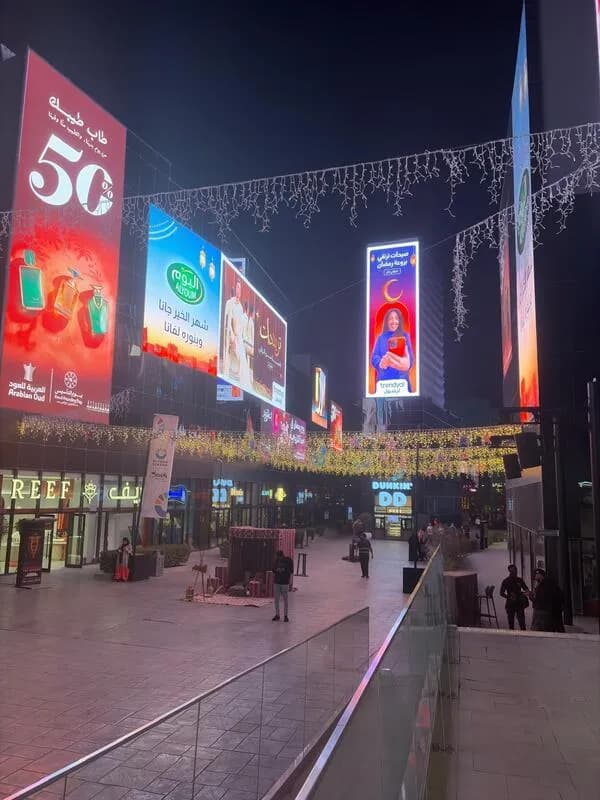
During Ramadan, the entire country transforms. Muslims fast from dawn to sunset - no food, water, or smoking. As a non-Muslim, you are not required to fast, but eating, drinking, and smoking in public during daylight hours is prohibited. Restaurants are closed until sunset (iftar), though many prepare takeaway boxes you can eat discreetly at home. Working hours are shortened to 6 hours. The country comes alive after dark: iftar buffets, night markets, family gatherings, and special prayers called Tarawih fill the evenings. Shops stay open until 1-2am. Ramadan in Saudi Arabia is a genuinely beautiful cultural experience once you understand it, but your first one as a newcomer requires adjustment. Plan meals at home during the day, be respectful of those fasting around you, and enjoy the vibrant nightlife that emerges.
Saudi Arabia is an absolute monarchy. The King is both head of state and head of government, and there is no parliament, no elections, and no political parties. The current ruler is King Salman bin Abdulaziz, who has reigned since 2015, but the driving force behind almost every reform of the past decade is his son, Crown Prince Mohammed bin Salman (MBS). MBS is the architect of Vision 2030, the person who opened cinemas, allowed women to drive, launched the tourist visa, and pushed through the social liberalization that has transformed daily life. His influence on the country is impossible to overstate - understanding Saudi Arabia in 2026 is essentially understanding what MBS is building.
The legal system is based on Sharia (Islamic law), interpreted by religious scholars and applied through a court system that operates differently from anything in Europe or the Americas. For everyday life as an expat, this means certain things are strictly illegal and enforced without exception: possessing or using drugs (penalties include the death penalty for trafficking), public blasphemy or insulting Islam, proselytizing any religion other than Islam, and possessing pornographic material. Alcohol is completely prohibited - there is no legal way to buy, sell, or consume it anywhere in the Kingdom. There are no exceptions for foreigners, and violations carry serious penalties including imprisonment and deportation.
In practice, most expats never have a problem with the legal system because the rules are clear and easy to follow. Do not bring drugs into the country, do not publicly criticize the government or religion, and do not import or make alcohol. Beyond these bright lines, Saudi law is not something most foreigners encounter in their daily lives. Labor disputes are handled through the Ministry of Human Resources, and contract law works much like anywhere else. The legal system protects expat workers in many areas - the Wage Protection System ensures salaries are paid on time, and end-of-service benefits are legally enforceable - though enforcement can require patience and persistence.
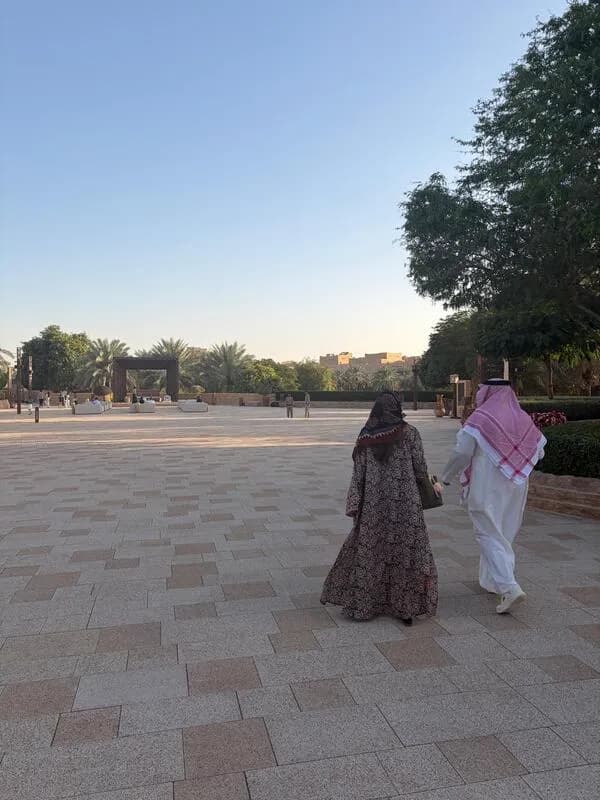
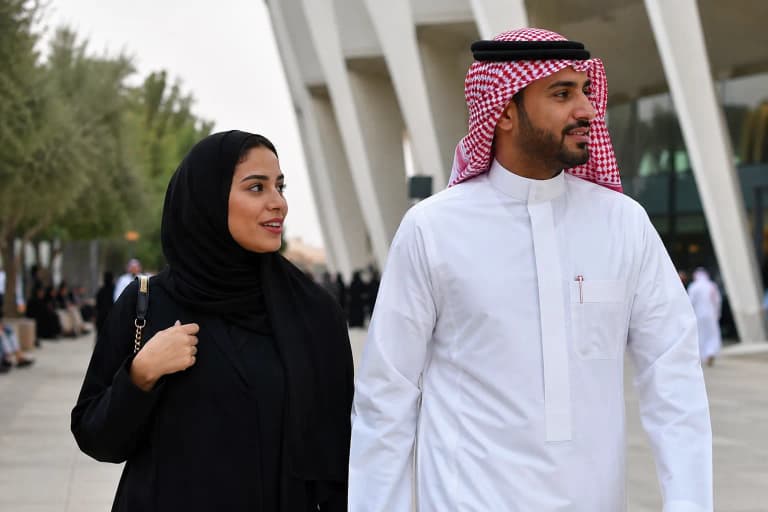
Saudi men traditionally wear the thobe (a long white robe), the ghutra (a white or red-and-white checkered headscarf), and the igal (the black cord that holds the ghutra in place). This is the standard daily outfit for most Saudi men - at the office, in malls, in restaurants, at government appointments. It is comfortable, practical in the heat, and carries cultural significance. Saudi women traditionally wear the abaya (a loose black robe over their clothing), often with a hijab (headscarf). Some women also wear the niqab (face veil), though this is a personal choice, not a legal requirement. In major cities, younger Saudi women increasingly wear colorful abayas, designer abayas, or even just modest Western clothing without an abaya at all.
As a foreigner, you are not expected to wear Saudi clothing, though some expat men buy a thobe for special occasions (they are genuinely comfortable in summer). Here is what works in different contexts:
The general rule: modest means comfortable. No one expects you to dress Saudi, but covering shoulders and knees in public shows respect and avoids any friction. In practice, most expats find the dress expectations much less restrictive than they feared.
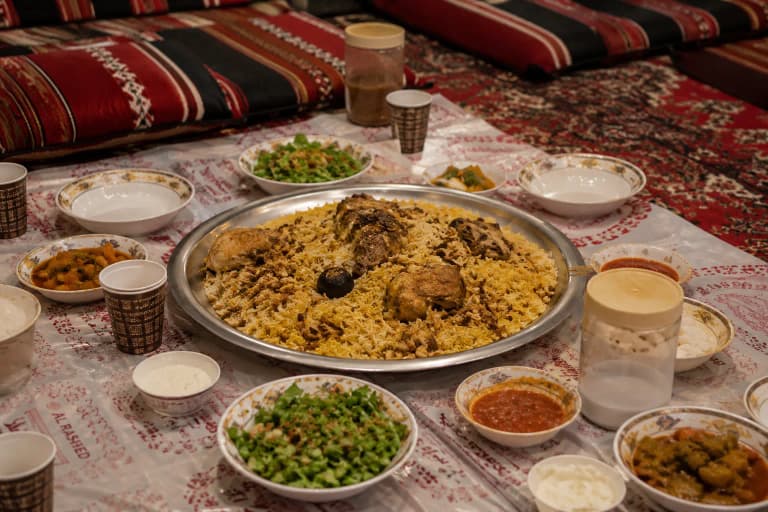
Saudi cuisine is one of the best parts of living here, and most newcomers are surprised by how rich and varied it is. The national dish is kabsa - spiced rice with slow-cooked meat (lamb, chicken, or goat), often served on a massive communal platter. It is served everywhere: at home, at restaurants, at celebrations, and at business meals. Other staples include mandi (similar to kabsa but with smoked meat), jareesh (cracked wheat porridge), mutabbaq (stuffed savory pastry), and shawarma (ubiquitous and typically 3-8 SAR - the cheapest meal in the country). Saudi Arabia also has a world-class Indian, Pakistani, Yemeni, and Lebanese food scene built by decades of immigration.
Saudis are deeply family-oriented and social. Eating together is not just a meal - it is the main way families and friends bond. Large communal meals are the norm, not the exception. If you have never been to the Arab world, one thing that may surprise you is eating on the floor. In many traditional restaurants and at home gatherings, a large plastic sheet is spread on the ground, dishes are placed in the center, and everyone sits cross-legged around the food. There are no plates - you eat directly from shared platters with your right hand, pulling rice and meat from the section closest to you. For newcomers this feels unusual at first, but it quickly becomes one of the most enjoyable social experiences in Saudi Arabia. Many restaurants offer both options: a traditional floor-seating area (often separated by curtains or partitions for families) and a regular table-and-chair section. Family sections and singles sections are common in traditional restaurants - do not be surprised if you are directed to one or the other.
Arabic coffee (qahwa) is central to Saudi social life and hospitality. It is brewed light with cardamom (sometimes saffron and cloves), served in small handle-less cups called finjan, and always accompanied by dates. When visiting a Saudi home, office, or even a car dealership, you will be offered coffee and dates as a greeting - refusing is considered impolite. The host pours, you drink with your right hand, and you gently shake the cup side to side when you have had enough. This ritual is so important that Saudi Arabic coffee was inscribed on UNESCO's Intangible Cultural Heritage list. Alongside traditional coffee, Saudi Arabia has developed an extraordinary specialty coffee scene - Riyadh and Jeddah are packed with third-wave coffee shops that rival anything in London or Melbourne.
A few more social customs worth knowing: remove your shoes when entering a Saudi home. Friday is the holy day - the equivalent of Sunday in Christian countries - and Jumu'ah (Friday noon prayer) is the most important of the week. Eid al-Fitr (end of Ramadan) and Eid al-Adha (Festival of Sacrifice) are the two major holidays, each bringing several days off work, family gatherings, gift-giving, and a festive atmosphere across the country. Saudi National Day (September 23) is celebrated with green flags, fireworks, parades, and genuine patriotic pride.
Without bars, pubs, or alcohol, the social fabric is different. This is actually one of the things many long-term expats grow to appreciate. Socializing happens in restaurants (Saudi Arabia has an excellent and rapidly growing food scene), cafes (the coffee culture is world-class), malls (which function as social hubs in ways they do not in Western countries), sports clubs (padel, football, cricket, running clubs), desert camping, and home gatherings. Join expat communities early: InterNations, Facebook groups for your nationality, compound social events, professional networking meetups, and sports leagues are how people build networks. Saudi colleagues may invite you to home gatherings or take you to their favorite restaurants - accepting is one of the best ways to experience Saudi hospitality firsthand.
Saudi Arabia's climate is the single biggest adjustment for most newcomers. The Kingdom spans roughly 2,150,000 km² - an area the size of Western Europe - so conditions vary significantly by region. But the common thread is heat: most of Saudi Arabia is hot for most of the year, and summer is genuinely brutal. Understanding the seasonal patterns is essential for planning your move, your wardrobe, your weekends, and your energy bills.
The country has three broad climate zones. The central interior (Riyadh, Buraidah, Hail) is desert - extremely hot and dry in summer, surprisingly cool in winter, with occasional frost in the north. The coastal regions (Jeddah, Dammam, Khobar, Jubail, Yanbu, Jizan) add crushing humidity to the heat, making summers feel even worse despite slightly lower peak temperatures. The southwestern highlands (Abha, Taif) sit at 1,500-2,400 meters elevation and enjoy the mildest climate in the Kingdom - cool summers, cold winters, and even some rainfall.
The best season in Saudi Arabia. Riyadh nights drop to 8-12°C (46-54°F) and you will need a jacket after dark. Abha and Taif can see frost at higher elevations. Desert camping, Riyadh Season festivals, mountain hiking, and rooftop dining are all at their peak. Electricity bills are at their lowest.
Temperatures climb fast - March is pleasant, May already feels like summer. Sandstorm season peaks in March-April. Central regions (Riyadh, Qassim) get the worst: orange-brown skies, visibility under 500m, fine dust coating everything. Keep windows sealed and invest in an air purifier. Jeddah gets occasional haze but rarely full storms.
Riyadh peaks at 45-50°C (113-122°F) with dry heat that masks dehydration - drink far more water than you think. The Eastern Province (Dammam, Khobar) is arguably worse: 38-48°C (100-118°F) plus 80-90% humidity. Life moves indoors entirely. Malls become social hubs. AC runs 24/7 and electricity bills can hit 700-1,500 SAR/month. Many expats take home leave. The only refuge is Abha and Taif.
Relief arrives. By late October, Riyadh evenings turn pleasant and outdoor dining returns. Temperatures drop steadily throughout November. Desert trips resume, outdoor sports restart, and the social calendar fills up. Jeddah humidity declines noticeably. The best time to arrive in Saudi Arabia.
| Expense / Issue | Summer | Winter |
|---|---|---|
| Electricity bill (2BR apt) | 700-1,500 SAR/mo | 200-400 SAR/mo |
| Car interior after parking outside | Up to 70°C / 158°F in 30 min | Comfortable |
| Sunburn risk (unprotected skin) | Under 15 minutes | 30-60 minutes |
| Outdoor activity | Before 7 AM or after 8 PM only | All day |
| Water intake needed | 3-4+ liters/day minimum | Normal (2L/day) |
| AC system recommendation | Central AC (most efficient) > Split units > Window units. Check insulation quality when apartment hunting. | |
Essential gear for your car: windshield sun shade, steering wheel cover, SPF 50+ sunscreen, sunglasses, hat, and water bottles. Tinted windows are standard in Saudi Arabia for good reason - leather seats get hot enough to burn skin in direct summer sun.
October through March is when you want to arrive. Daytime temperatures range from 15-28°C (59-82°F), evenings are cool enough for outdoor dining, and you can walk around, explore, and apartment-hunt comfortably. Late October or November is the ideal window: schools are in session, the job market is active after the summer lull, apartments are available, and you have the entire pleasant season ahead of you.
June through September is the worst time to relocate. Apartment hunting is miserable, many expats are on home leave so networking is thin, and everything from getting a SIM card to visiting Jawazat feels twice as exhausting. If your employer dictates a summer start date, negotiate for temporary furnished accommodation and an extended settling-in period.
For families: Align your arrival with the school calendar. International schools start in September, with a second intake window in January. Arriving mid-term means your children miss enrollment windows and may have to wait months for a spot. Apply to schools 3-6 months before your planned move date.
Document preparation is the most tedious part of moving to Saudi Arabia, and getting it wrong delays everything by weeks. The key concept you need to understand is attestation - a multi-step verification chain that Saudi Arabia requires for most official documents.
Your passport must be valid for at least 6 months beyond your planned arrival date. Make multiple copies - physical copies stored in different bags, plus digital scans saved in cloud storage. Your employer's PRO will need your original passport for the Iqama process and may hold it for several days. This is normal and legal (holding your passport permanently is not, but holding it briefly for processing is standard).
Degree certificates and professional qualifications need full attestation. The chain works like this: (1) verification letter from the issuing university confirming your degree is genuine, (2) notarization by a public notary in your country, (3) authentication by your country's Ministry of Foreign Affairs (or equivalent - the Apostille in many countries), and (4) final attestation by the Saudi embassy or consulate in your country. This process takes 2-6 weeks depending on the country and can cost 1,000-3,000 SAR equivalent. Start this the day you accept a job offer. Some employers use specialized attestation agencies to handle it; others leave it entirely to you.
If bringing your spouse, your marriage certificate needs the exact same attestation chain. Children's birth certificates need attestation for dependent visa applications. If you are divorced and have custody, bring attested custody documents. Gather all original documents and their attested copies in one organized folder and carry it in your hand luggage - never in checked bags. Losing attested documents means restarting the weeks-long process.
Bring your driving license from home, plus an International Driving Permit (IDP) if available from your local automobile association. Have a medical letter from your doctor if you take any prescription medication - listing the medication name, dosage, and reason, in English (and Arabic if possible). Bring 6-8 passport-sized photos with a white background - Saudi bureaucracy still requires physical photos for various applications. And have bank statements from the last 3-6 months, which may be requested during bank account opening.
| Document | Preparation needed | Required? |
|---|---|---|
| Passport | Valid 6+ months, multiple physical and digital copies | Essential |
| Employment visa | Employer arranges through MOFA; collect stamp at Saudi embassy | Essential |
| Degree certificates | Full attestation: university → notary → foreign ministry → Saudi embassy | Essential |
| Marriage certificate | Same attestation chain as degrees | If bringing spouse |
| Birth certificates | Attested, for each dependent child | If bringing children |
| Driving license + IDP | Home license plus International Driving Permit | If you plan to drive |
| Medical letter | Doctor's letter listing medications, dosages, conditions | If on prescription medication |
| Passport photos | 6-8 copies, white background, recent | Essential |
| Bank statements | Last 3-6 months from home bank | Recommended |
Not necessarily. English is widely used in business, healthcare, and international communities, especially in large companies and hospitals. You can get by day-to-day without Arabic in most professional settings. That said, learning basic phrases - greetings, numbers, directions, common requests - will make your life significantly easier at grocery stores, with landlords, in government offices, and when building rapport with colleagues. Most expats pick up functional Arabic within their first year. Apps like Duolingo and local language schools (many attached to cultural centers) offer Saudi-dialect courses.
Saudi Arabia is one of the safest countries in the world. Violent crime is extremely rare, theft is uncommon, and most expats report feeling safer walking around at night than in major Western cities. The government invests heavily in public safety, with visible police presence and extensive CCTV in cities. Compounds have their own security. The main risks are traffic accidents (Saudi driving can be aggressive, especially on highways) and heat-related illness in summer. For families, the safety factor is often cited as one of the biggest positives - children can play outside with minimal concern.
Yes, and the situation has changed dramatically since 2019. Women can now drive, travel independently without male guardian permission, work in almost all sectors, live alone, attend public events, and own businesses. The female workforce participation rate is growing rapidly as part of Vision 2030. Many international women work in healthcare, education, finance, and tech. While Saudi Arabia is still a conservative society with modest dress expectations in public, the day-to-day experience for working women has improved enormously. Women-only gyms, salons, and social spaces are widespread.
Alcohol is completely prohibited throughout Saudi Arabia. This is strictly enforced, and violations carry severe penalties including fines, imprisonment, and deportation. There are no exceptions for expats, no licensed bars, and no duty-free allowance at airports. Most expats adapt faster than they expect. The non-alcoholic beverage scene is growing rapidly, Saudi coffee culture is excellent, and social life revolves around restaurants, cafes, desert trips, sports, and home gatherings. Many expats say they enjoy socializing more without alcohol.
Most expats save 40-70% of their salary, depending on lifestyle and family situation. A single professional earning 15,000 SAR/month with employer-provided housing can save 8,000-10,000 SAR/month. With a family, the dependent levy (400 SAR/month per person), school fees (15,000-60,000 SAR/year per child), and larger housing reduce savings significantly. The zero income tax is the biggest factor - your gross salary is your take-home pay. Many expats set a savings target before arriving and work backwards to determine the minimum salary they need.
You get a 60-day grace period to find a new employer willing to sponsor your Iqama transfer. If you find one, the transfer happens through the Qiwa platform. If not, you need to leave on a final exit visa. Your employer must pay your end-of-service benefits (half a month's salary per year for the first 5 years, one month per year after that) within one week. Before leaving, transfer your savings while your Iqama is still active, settle any traffic fines, and close utility contracts. Outstanding debts can trigger a travel ban at the airport.
Most experienced expats recommend coming alone first for 2-3 months. Get your Iqama, find housing, open a bank account, figure out the city, and identify schools before uprooting everyone. Bringing family immediately means navigating school enrollment, housing, dependent Iqamas, and administrative tasks simultaneously while adjusting to a new country yourself. Plus, you need your own Iqama before you can even apply to sponsor dependents. The exception: if your employer provides comprehensive relocation support with temporary furnished housing, school enrollment assistance, and a dedicated PRO.
The Kafala (sponsorship) system ties your residency to your employer. They sponsor your Iqama, handle renewals, and historically controlled whether you could leave the country or change jobs. Reforms since 2021 have loosened this significantly: you can now transfer employers after 12 months without your current employer's consent, and request exit visas through Absher independently in many cases. But your employer still plays a central role in your legal status - they pay for your Iqama, handle renewals, and submit most government paperwork. Premium Residency (800,000 SAR permanent or 100,000 SAR/year) removes Kafala entirely.
The most common mistakes: not bringing enough cash for the first month (you can't open a bank account without an Iqama), not getting documents attested before leaving home (the attestation chain takes weeks), accepting a job without negotiating the full package (housing, flights, education allowances matter more than base salary), not asking about the dependent levy before bringing family (400 SAR/month per person adds up fast), arriving in summer (June-August heat makes settling in miserable), and not clarifying salary payment method for the first month.
Saudi Arabia is more conservative, more affordable, and offers higher savings potential. Dubai has alcohol, a more established entertainment scene, and a more liberal social atmosphere. Saudi Arabia has zero income tax (Dubai also has none, but UAE recently introduced corporate tax). Saudi offers higher salaries in many sectors, especially oil and gas, healthcare, and mega-project roles. Housing is cheaper in Saudi Arabia. The cultural adjustment is bigger in Saudi Arabia, but many expats say the experience feels more 'authentic' and rewarding. Saudi Arabia is also changing much faster than the UAE did at the same stage.
Moving to Saudi Arabia involves many interconnected decisions. These guides go deeper on specific topics:
Work Visa Guide
Full step-by-step process from job offer to arrival
Iqama (Residence Permit)
How the Iqama works, renewal, penalties, your rights
Open a Bank Account
Which banks, what documents, Mada card explained
Renting a Home
Compounds, apartments, Ejar platform, rental costs
Work Visa
Employment visa requirements and process
Premium Residency
Self-sponsored residency without employer dependency
Explore city guides to find the best fit, or dive into the visa process to understand what comes next.