Loading...
Join our Facebook Group: Join: Expats in Saudi Arabia
Loading...
A practical guide to the Saudi work visa process: what your employer handles, what you need to prepare, and what to expect from your first job offer to your first day at work.
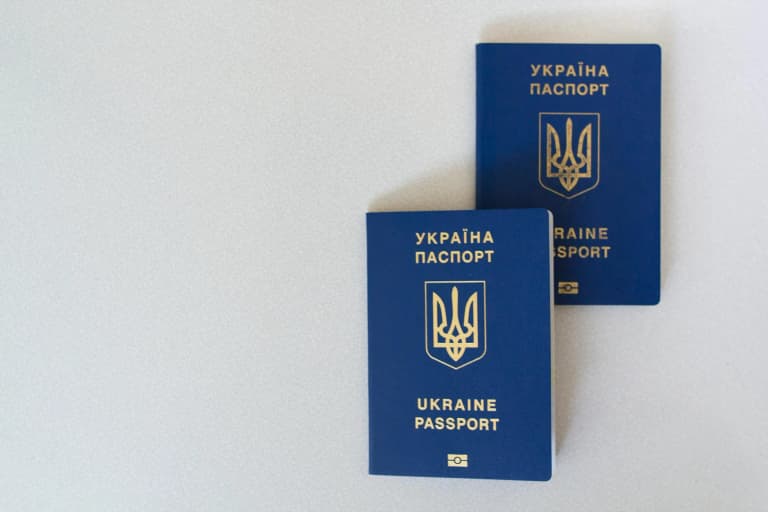
The most important thing to understand: you cannot apply for a Saudi work visa on your own. The entire process is employer-driven. You first need a job offer from a Saudi company, and then your employer handles the visa from their side.
The process works like this: your employer requests a work permit from the Ministry of Human Resources (MHRSD) and a visa block from the Ministry of Foreign Affairs (MOFA). Once approved, you receive a visa authorization number, take it to the Saudi embassy in your country, submit your documents, and get the visa stamped in your passport.
After arriving in Saudi Arabia, your employer processes your Iqama (residence permit) - the card that becomes your primary ID in the Kingdom. You need it for everything: opening a bank account, renting an apartment, getting a phone contract, and even routine police checks. Your employer renews it annually.
The process at a glance
Job offer → employer gets visa block → you apply at Saudi embassy → fly to Saudi Arabia → employer processes your Iqama.
Working on a tourist, visit, or business visa is illegal. Penalties include fines up to 100,000 SAR, deportation, and a permanent re-entry ban. If you plan to work in Saudi Arabia, you need a proper work visa.
Already have a job offer? Skip to documents you need to prepare or the step-by-step process.
Considering alternatives? If you want to work independently without an employer sponsor, check the Freelance Work Permit or the Premium Residency program.
Saudi Arabia uses a sponsorship system called kafala. Your employer (called your kafeel/sponsor) is legally responsible for your visa and status in the country. This means your ability to work, travel, and stay in Saudi Arabia is tied to your employer - though recent reforms have loosened this significantly.
Your sponsor still initiates and manages the visa process, renews your Iqama, and must provide health insurance. But you are no longer trapped if the relationship goes wrong.
Saudi Arabia requires companies to employ a minimum percentage of Saudi nationals (called Nitaqat or Saudization). Companies are rated by color: Platinum and Green companies meet the requirements and can hire foreigners easily. Yellow and Red companies are below quota and may not be able to get work visas at all.
Some professions are fully restricted to Saudi nationals - including many HR, accounting, and sales roles. Before accepting a job offer, confirm that your specific role is open to foreign workers and that the company is in good standing with Nitaqat.
Practical tip: Ask your prospective employer about their Nitaqat color. Green and Platinum companies process visas faster and face fewer restrictions. If they are in the Red zone, your visa may get stuck or rejected.
Your employer handles the government applications on their side (work permit, visa block from MOFA). What you need to focus on is preparing your personal documents - and the attestation process, which is the most time-consuming part.
Start attestation immediately. The attestation chain takes 4-8 weeks and is the #1 reason for delays. Begin the process the day you accept a job offer - do not wait for the visa block number.
Here is the full timeline from accepting a job offer to arriving in Saudi Arabia. Steps marked (you) are things you do. Steps marked (employer) are handled by your company.
Your employer applies for a work permit through the Qiwa platform and requests a visa block from MOFA. This is where Nitaqat status matters - Green/Platinum companies get approved faster. You cannot do anything at this stage except wait.
Do not wait for the visa block. Start the attestation chain for your degrees and get your medical exam at an approved center right away. These run in parallel with your employer's application and are the longest part of the process on your end.
Your employer sends you the visa block number and authorization letter. Some use the electronic Enjaz system (the embassy can look up your visa directly), others send a physical letter. You need this for your embassy appointment.
Book an appointment at the Saudi embassy or consulate (in some countries, through VFS Global or Tasheer). Submit your passport, visa application form, medical report, attested documents, photos, and visa block number. Biometric data may be collected.
Once approved, a work visa sticker is placed in your passport. You have 90 days to enter Saudi Arabia. Your employer typically arranges airport pickup and initial accommodation. Upon arrival, they begin processing your Iqama.
By Saudi law, the employer pays for most visa-related costs. Here is the breakdown so you know what to expect - and what to push back on if asked to pay.
| Fee | Amount | Who pays |
|---|---|---|
| Work permit fee | ~1,200 SAR/year | Employer (by law) |
| Visa issuance | 2,000 SAR (~$533) | Employer (by law) |
| Iqama issuance + annual renewal | 650 SAR/year (~$173) | Employer (by law) |
| Health insurance | 1,500-5,000 SAR/year | Employer (by law) |
| Dependent levy (if you bring family) | 400 SAR/month per person | Usually you |
| Medical exam (in your country) | $50-130 equivalent | Varies (often you) |
| Document attestation chain | $130-530 equivalent | Varies (often you) |
For senior or specialized positions, some employers cover everything including attestation costs and dependent levies as part of the relocation package. This is worth negotiating.
The total process from accepting a job offer to holding your Iqama in Saudi Arabia takes 6 to 12 weeks. The good news is that several steps run in parallel, so the timeline is shorter than it looks on paper.
On your employer's side, obtaining the work permit and visa block from MOFA typically takes 1 to 4 weeks. Companies with a Platinum or Green Nitaqat rating get approved faster, while Yellow or Red companies may face delays or rejections. You have no control over this step, but it is happening while you prepare your own documents.
The biggest bottleneck on your side is document attestation, which takes 2 to 6 weeks depending on your country. The chain - home country notarization, your foreign ministry, then the Saudi embassy - moves slowly and cannot be rushed. Start this the day you accept the offer, not when the visa block arrives. Your medical exam can be done in parallel and takes about 3 to 7 working days at a GAMCA-approved center (for countries like India, Pakistan, Bangladesh, and the Philippines) or an embassy-listed facility.
Once you have all documents ready and the visa block number from your employer, the embassy appointment and visa stamping takes 3 to 10 working days. Processing times vary by embassy and tend to be slower during peak hiring seasons.
After you arrive in Saudi Arabia, your employer's PRO (Public Relations Officer) handles the Iqama processing, which takes another 1 to 3 weeks. This includes a second medical exam done in-country and biometric registration at the Jawazat (passport office).
The key takeaway: attestation is the critical path. If you start it immediately, the rest of the process fits around it without adding extra time.
Saudi labor law gives you more protections than many expats realize. Know these before you arrive:
Red flags when evaluating a job offer: The employer asks you to pay visa fees. They want you to sign an Arabic-only contract. The contract terms differ from what was discussed. They mention "free visa" (selling visa sponsorship without real employment is illegal). Report violations to MHRSD: call 19911.
Since the 2021 reforms, switching employers no longer requires your current employer's permission. Here is what you need to know:
You have 60 days to find a new employer and transfer your sponsorship. During this period, your Iqama remains valid. If you cannot find a new job, you must request a final exit visa through Absher and leave Saudi Arabia. End-of-service benefits are payable regardless of how employment ends. If you have a dispute with your employer, you can file a complaint with the labor court.
Saudi compensation packages are structured differently from what you may be used to. The base salary is only part of the picture - allowances often make up 30-50% of total compensation. Here is what is standard and what you should push for:
A typical Saudi employment package includes a base salary, a housing allowance (usually 25% of base salary, or company-provided accommodation), and a transport allowance (often 10% of base or a company car). Most employers also provide annual return flights to your home country - one ticket per year is standard, two is common for senior roles. Health insurance for you is mandatory by law, but coverage for your family is negotiable.
Keep in mind: Saudi Arabia has no personal income tax. A salary of 15,000 SAR/month in Riyadh is roughly equivalent in purchasing power to earning $6,000-7,000 after tax in a Western European city, depending on your lifestyle and whether housing is provided.
Saudi labor law sets clear rules on working hours, leave, and holidays. Knowing these before you arrive helps you evaluate an offer and understand what is normal.
The legal maximum is 8 hours per day / 48 hours per week. Most offices work Sunday through Thursday, with Friday and Saturday as the weekend (Saudi Arabia switched from a Thursday-Friday weekend in 2013). During Ramadan, working hours are reduced to a maximum of 6 hours per day / 36 hours per week for Muslim employees, and most companies reduce hours for everyone.
You are entitled to 21 days of paid annual leave for the first 5 years, increasing to 30 days after that. Leave can be accumulated but your employer can require you to take it within a year. Sick leave is 30 days at full pay, 60 days at 75% pay, and 30 days unpaid.
Saudi Arabia has two major holiday periods: Eid al-Fitr (end of Ramadan, typically 4 days off) and Eid al-Adha (typically 4 days off). Saudi National Day (September 23) is also a public holiday. Dates for the Eid holidays follow the Islamic (Hijri) calendar and shift by about 10-11 days earlier each year. During these holidays, most businesses close entirely.
Ramadan significantly affects working life. Eating, drinking, and smoking in public during daylight hours is prohibited (including for non-Muslims). Offices typically run from around 10am to 3pm or 4pm. Restaurants are closed during the day but open after sunset (iftar). Many businesses shift their active hours to the evening. The month ends with the Eid al-Fitr holiday.
Saudi Arabia is heavily digitized. Almost everything - from visa management to grocery delivery - runs through apps. As a worker, you will interact with these government platforms regularly:
Tip: Most of these platforms require a Saudi phone number for OTP verification. Get a Saudi SIM as soon as possible after arrival - even a prepaid one from the airport works for initial registration.
The biggest risk before you even leave your home country is falling for a fraudulent job offer. Scam recruitment agencies operate across South Asia, Southeast Asia, and Africa, charging upfront fees for jobs that do not exist. A legitimate Saudi employer will never ask you to pay for the visa process - that is their legal obligation. Before accepting any offer, verify that the company has a valid commercial registration (CR) number and check their Nitaqat status through the MHRSD website. If the offer came through a recruiter rather than the company directly, verify the position independently.
Once you receive a legitimate offer, pay close attention to the contract. In Saudi Arabia, the Arabic version of your employment contract is the legally binding document, not the English translation. These two versions do not always match, and any dispute will be resolved based on the Arabic text. Have the Arabic version independently translated before you sign. If the terms differ from what was discussed verbally or in the English version, do not sign until the discrepancies are resolved.
After arriving, some employers will ask to hold your passport for "safekeeping" or "administrative purposes." This is illegal under Saudi law, even though it remains common practice, especially in certain industries. You have the right to keep your passport at all times. If your employer insists, you can report it to MHRSD through the 19911 hotline.
On the administrative side, the two most common self-inflicted problems are delaying document attestation and skipping Absher registration. The attestation chain takes 4 to 8 weeks and is the single biggest cause of delayed arrivals - start it the day you accept the offer, not when the visa block arrives. And once you have your Iqama, register on Absher immediately. Without it, you cannot apply for exit/re-entry visas, access government services, or manage your immigration status independently.
Finally, take visa expiry dates seriously. Overstaying your visa or Iqama carries fines starting at 100 SAR per day, escalating with repeat offenses. Prolonged overstaying can lead to deportation and a permanent re-entry ban. Set calendar reminders for your Iqama renewal date and follow up with your employer's PRO well in advance.
Yes, but you need a minimum monthly salary (typically 3,000-4,000 SAR, varies by profession). You apply for dependent visas through Absher. A dependent levy of 400 SAR/month per family member applies. Some employers include this in the compensation package - it is worth negotiating. You can apply for dependent visas through the Absher portal.
No. Saudi Arabia has no personal income tax. Your salary is tax-free in the Kingdom. There is a 15% VAT on goods and services. However, you may still owe taxes in your home country depending on their rules on worldwide income - check with a tax advisor before assuming you are fully tax-free.
There is no universal minimum wage for foreign workers. The 4,000 SAR minimum applies to Saudi employees for Nitaqat purposes. Your contract must specify a salary, and if you want to sponsor dependents, you will need at least 3,000-4,000 SAR/month. In practice, salaries vary enormously by industry, role, and nationality.
There is no permanent residency based on years of residence. However, the Premium Residency program offers permanent residency for a one-time fee of 800,000 SAR, or annual residency for 100,000 SAR/year. Premium Residents can work for any employer, own property, and do business without a sponsor. See our Premium Residency guide.
By Saudi law, your employer pays the main work visa costs: the work permit fee (~1,200 SAR/year), visa issuance (~2,000 SAR), Iqama issuance and renewal (~650 SAR/year), and your health insurance. You typically only cover your own medical exam ($50-130) and document attestation ($130-530), and the dependent levy (400 SAR/month per person) if you bring family. Government fees change periodically, so confirm current amounts with your employer or the Saudi embassy.
Not on your own. A Saudi work visa is always employer-sponsored - you cannot self-apply. Your employer files the work permit and visa block online through the Qiwa platform and MOFA/Enjaz system. Your part is often started online too: many Saudi embassies process applications through the Enjaz portal or partners like VFS Global and Tasheer, but you still submit your passport and documents in person for stamping and biometrics.
You must be at least 18 to work in Saudi Arabia. There is no fixed universal upper age limit in the law, but in practice work visas and permits are usually issued for applicants under 60, and approvals for older candidates depend on the profession and require justification. Some sectors and employers apply their own age caps. If you are near or above 60, confirm eligibility with your prospective employer before accepting an offer.
6-12 weeks from accepting a job offer to receiving your Iqama in Saudi Arabia. The biggest variable is document attestation (2-6 weeks depending on your country). Start it immediately upon accepting the offer and the rest of the process runs in parallel.
Once your visa is sorted, these guides will help you settle in:
Open a Bank Account
Which banks work for expats, what documents you need
Get a SIM Card
Prepaid vs postpaid, best carriers, eSIM options
Find Housing
Renting as an expat, neighborhoods, costs
Register on Absher
Step-by-step guide to the main government portal
Understand GOSI
Social insurance, what you pay, what you get
Explore Cities
Riyadh, Jeddah, Dammam and more - cost of living, neighborhoods